
Sun protection is not a finishing touch—it is the foundation
The right sunscreen makes broad-spectrum protection, generous application, and reapplication possible together. Choose a texture for your skin and make protection part of every day, not just summer holidays.
- Choose
- SPF 30+
- Coverage
- Broad spectrum
- Outdoors
- Reapply about every 2 hours
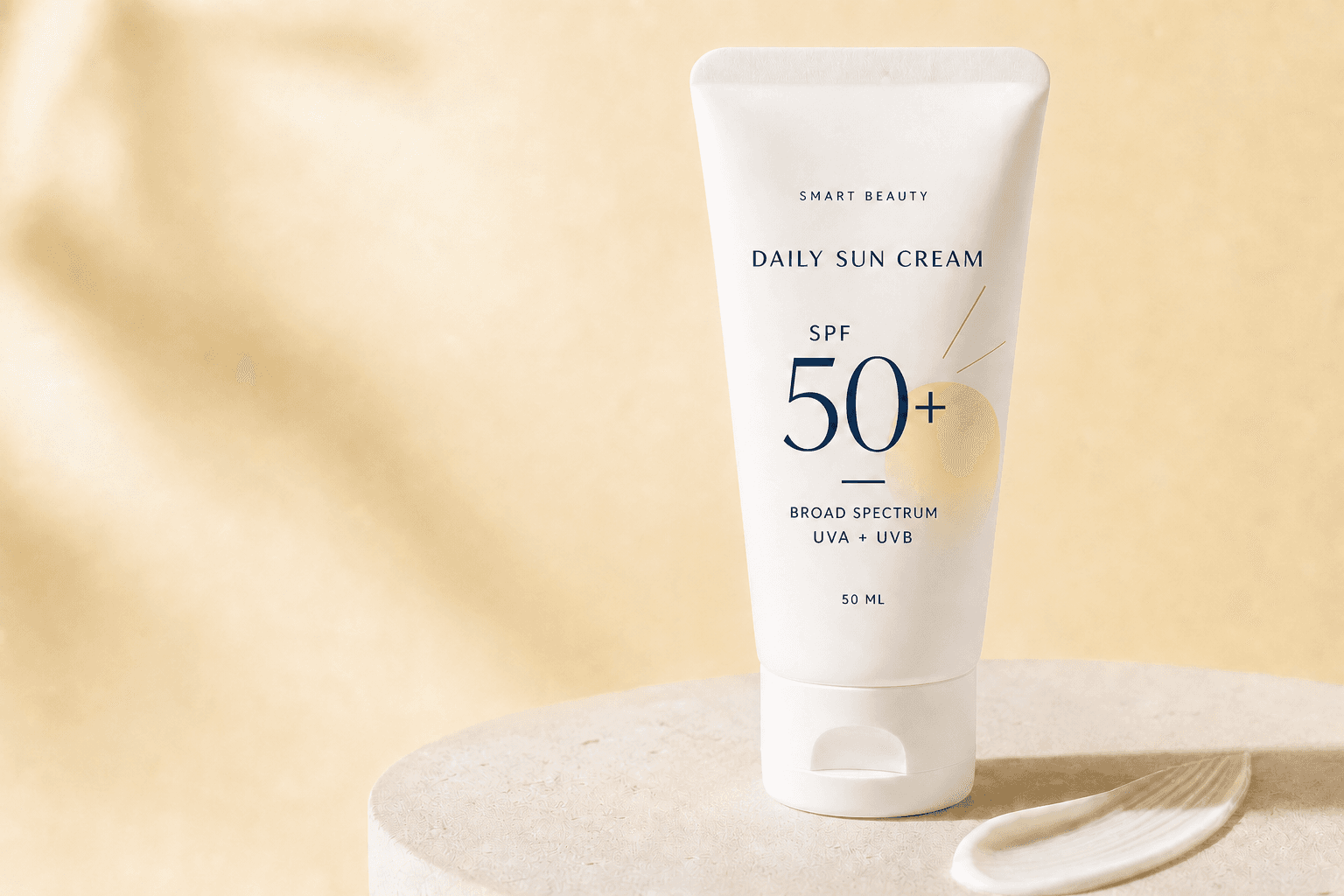
DAILY PROTECTION
SPF 50+
UVA + UVB
More than one SPF number
SPF primarily reflects UVB protection associated with sunburn. Your daily choice should also carry a broad-spectrum label indicating UVA and UVB coverage.
Longer wavelength
UVA
Can pass through glass to a degree and is associated with visible early aging and pigmentation changes.
Sunburn
UVB
The main cause of sunburn and part of the UV damage that contributes to skin-cancer risk.
Dark-spot focus
Visible light
Tinted sunscreens with iron oxides may provide extra support for skin prone to hyperpigmentation.
Cloudy and cool does not mean UV-free
UV exposure does not disappear completely with season or weather. Make sunscreen a routine on mornings when you will be outdoors.
LABEL DECODER
Look for three statements together
A high SPF on the front does not tell the whole story. Coverage, use conditions, and reapplication directions should be read together.
There is no waterproof sunscreen
Water resistance is temporary. Reapply after swimming, heavy sweating, and toweling according to the labeled duration.
SPF 30 or higher
The dermatologist-recommended starting level for daily use. A high number does not compensate for applying too little.
Broad spectrum
Indicates tested protection across both UVA and UVB radiation.
Water resistant
States a tested 40- or 80-minute protection period during swimming or sweating.
CHOOSE FOR YOUR SKIN
Not the best filter—the formula you can use consistently
Mineral, organic, and hybrid filter systems can all be effective when well formulated. Daily success depends on broad spectrum, enough product, tolerance, and reapplication.
Oily / combination skin
Light fluid or gel cream
Fast-spreading, shine-controlling, non-comedogenic formulas may sit more comfortably under makeup.
Dry / dehydrated skin
Moisturizing cream texture
Formulas with glycerin, squalane, or ceramides that do not emphasize visible flaking.
Sensitive / reactive skin
Simple, fragrance-free formula
Mineral options with zinc oxide or titanium dioxide may feel more comfortable for some sensitive skin; patch test first.
Hyperpigmentation-prone skin
Tinted + iron oxides
Broad-spectrum tinted formulas can add visible-light support while reducing the look of white cast.
Finish matters as much as texture
Natural
A balanced, easy-to-layer finish for most skin types and everyday use.
Matte
Useful for shine and makeup; check whether it emphasizes dry areas.
Radiant
Adds a lively finish to dry or dull skin but may feel shinier on oily skin.
Tinted
Supports tone evening and visible-light protection; choose a shade that matches.
ENOUGH PRODUCT
Protection starts with the amount you apply
The labeled SPF is tested at a defined application density. Applying a very thin layer can reduce protection; create a generous, even film over face, ears, and neck.
Finish skincare first
Apply serum and moisturizer, then make sunscreen the final step of your morning skincare routine.
Set aside enough
Two lines along the index and middle fingers are a practical face measure; use more for ears and neck.
Apply in sections
Dot over cheeks, nose, forehead, chin, ears, and neck, then smooth into an even film.
Apply before going out
Use about 15 minutes before outdoor exposure and allow the layer time to settle.
Most-missed areas
A smoother finish under makeup
Spread in thin passes, reduce rubbing, and let the layer settle before makeup. If it pills, reduce the amount of skincare underneath.
MAINTAIN PROTECTION
When should you reapply?
Reapplication depends on the day. Outdoor time, sweat, water, and friction all reduce the protective film.
Outdoors
About every 2 hours
Reapply throughout outdoor exposure according to product directions.
Swimming or heavy sweating
Follow the labeled 40/80 minutes
Even water-resistant sunscreen must be reapplied after water and sweat.
After toweling
Immediately afterward
Friction removes the protective film; reapply after drying off.
Mostly indoors
Based on exposure
Plan to reapply around windows, outdoor breaks, or long drives.
A stick, cushion, or spray can be practical over makeup, but make sure you achieve enough even coverage. It does not replace the base cream layer in the morning.
A SUN-SAFETY PLAN
Sunscreen is not the only defense
No product blocks all UV radiation. Combine sunscreen with shade, clothing, and thoughtful timing.
Shade
Reduce direct exposure, especially when sunlight is strongest.
Clothing
Wear long sleeves, a broad-brimmed hat, and UV-protective sunglasses.
UPF
Use UPF-rated clothing for extended outdoor time.
Planning
When possible, schedule long outdoor activities for lower-UV hours.
Common misconceptions
SPF makeup is enough
It is rarely applied at the recommended amount and should not replace a base sunscreen layer.
Dark skin does not need SPF
All skin tones can be affected by UV damage; choose a no-cast or tinted formula.
High SPF lasts all day
High SPF does not remove the need to reapply. Water, sweat, and friction reduce the film.
GOOD TO KNOW
Quick answers about sun protection
What is the difference between SPF 30 and SPF 50?+
Both offer high protection when broad spectrum and applied correctly. SPF 50 provides higher UVB protection, but underapplication or skipping reapplication reduces the advantage.
Does sunscreen go before or after moisturizer?+
Sunscreen is the final step of morning skincare. Makeup can follow.
Do I need sunscreen indoors?+
Consider your exposure if you sit near windows, use a balcony, drive, or go outside during the day.
Are mineral filters better than organic filters?+
No one filter type is best for everyone. A broad-spectrum SPF 30+ formula you tolerate and can apply generously matters more.
Why does sunscreen pill?+
Too much skincare, incompatible film-forming layers, or rubbing before layers settle can contribute. Use thinner layers and press gently.
How long does opened sunscreen last?+
Follow the expiration date or period-after-opening symbol. Reassess a product exposed to heat or showing scent and texture changes.
This guide is for general information and is not medical diagnosis or treatment. Consult a dermatologist about photosensitivity, changing moles, or skin-cancer risk.