
Not a serum for everything—the right serum for one clear goal
Serums are useful because of the specific need they address, not because of concentrated-sounding claims. Choose one priority—dullness, visible pores, oil balance, or dehydration—and build without overwhelming your skin.
- Amount
- 2–3 drops
- Order
- After cleansing
- Rule
- One goal first
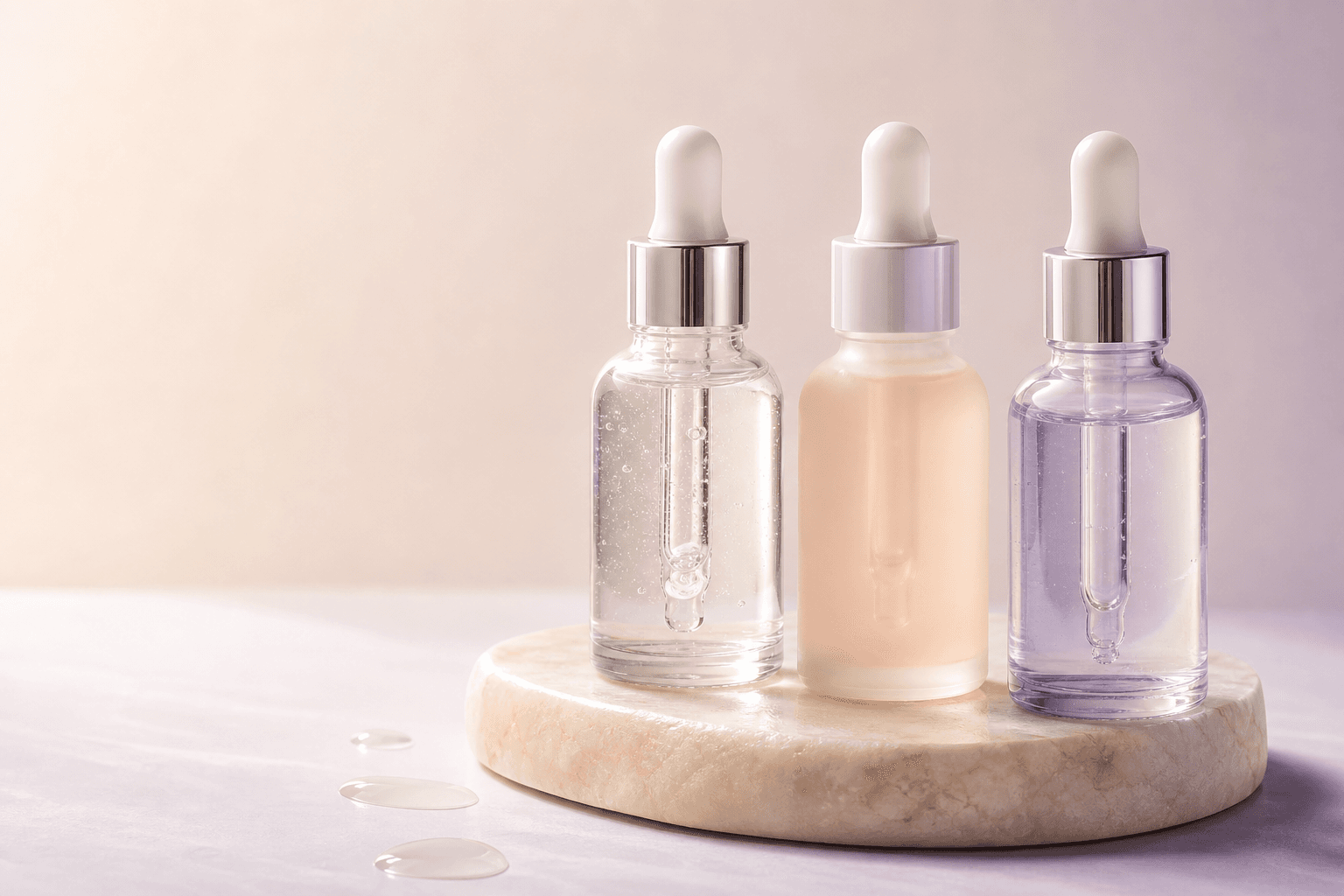
SERUM WARDROBE
Fewer bottles, a better match
A simple serum routine is enough when your skin goal, formula texture, and frequency work together.
START WITH ONE GOAL
What does your skin need?
Choose your most visible need rather than trying to solve everything at once. The best serum is one you can use consistently and that fits the rest of your routine.
Dullness + uneven tone
Vitamin C
Usually morning
Provides antioxidant support and is paired with daytime SPF when targeting a brighter, more even-looking complexion.
Vitamin C guideVisible pores + shine
Niacinamide
Morning or evening
A versatile option for a simple routine focused on oily shine, uneven-looking texture, and barrier comfort.
Niacinamide guideDehydration + tightness
Hyaluronic acid
Morning and/or evening
Helps bind water at the skin's surface. It feels most balanced when applied to slightly damp skin and followed with moisturizer.
Hyaluronic acid guideLOOK AT THE COMPLETE FORMULA
Four checkpoints before percentage
Active percentage alone does not define quality. A good serum combines the targeted ingredient, a supportive base, suitable packaging, and a frequency your skin can tolerate.
The highest percentage is not automatically the best serum
A higher active level does not always mean faster results and may increase stickiness, dryness, or stinging. Start less often on sensitive skin and judge the complete formula.
Target ingredient
Does the formula's main purpose match your priority? Several strong actives in one bottle are not always an advantage.
Supportive base
Humectants such as glycerin, panthenol, or hyaluronic acid can improve the comfort of an active formula.
Texture and finish
Oily skin may prefer light water-based textures; dry skin may enjoy more emollient, milky serums.
Packaging
For ingredients sensitive to light and air, opaque or air-restricting packaging can help support formula stability.
THE RIGHT ORDER
Place serum into your routine in four steps
A general approach is to apply the treatment step to clean skin before moisturizer. Starting with one targeted serum makes it easier to understand how your skin responds.
Cleanse gently
Remove dirt, makeup, and sunscreen so serum can spread evenly over the skin.
Apply 2–3 drops
Spread a thin layer over face and neck. Do not touch the dropper directly to skin.
Follow with moisturizer
Support hydration and comfort with a moisturizer suited to your skin type.
Use SPF in the morning
Finish the daytime routine with broad-spectrum SPF 30+.
Morning routine
Evening routine
There is no mandatory waiting time. Move on when the previous layer has settled; if products pill, reduce the amount.
SMART LAYERING
How many serums in one routine?
One targeted serum is enough for most routines. If you use two, consider total irritation load and how the textures behave together before focusing on ingredient compatibility.
One new product
Introduce new serums one at a time so you can identify the source of stinging or redness.
Thin to thick
Apply the more fluid water-based texture first and the richer or milky serum second.
Split strong actives
If they feel uncomfortable together, use the antioxidant in the morning and the other active at night or on alternate days.
Reduce frequency
When sensitivity develops, use the serum less often instead of adding another product.
Easy pairings
Hyaluronic acid + niacinamide
Combines hydration and balance support in a gentle routine.
Vitamin C + hyaluronic acid
Adds a hydration step after an antioxidant serum.
Serum + ceramide cream
Completes the routine with a barrier-friendly moisturizer.
Do not overload one routine
Layering a strong retinoid, high-strength exfoliating acid, and low-pH active serum in one night can increase irritation risk. Separate them across different days while skin adjusts.
BY SKIN TYPE
One ingredient, different texture needs
Look beyond the active name to the formula base and finish. Your skin type helps determine which texture you can use consistently.
Oily / combination skin
Light, fast-spreading serum
Niacinamide or lightweight humectant formulas in a non-comedogenic base without a heavy oily finish.
Dry / dehydrated skin
Milky or hydration-focused serum
Hyaluronic acid, glycerin, or panthenol followed with a richer ceramide moisturizer.
Sensitive / reactive skin
Short ingredient list
Fragrance-free, essential-oil-free formula introduced less frequently and tested on a small area first.
Check serum freshness
Color
Significant darkening in a pure vitamin C serum may indicate oxidation.
Scent
Notice any sharp or unusual smell that develops after opening.
Texture
Check product guidance if the serum separates, clumps, or changes consistency unexpectedly.
Storage
Close the cap tightly and store away from direct light and heat according to product directions.
GOOD TO KNOW
Quick answers about serums
Should I use serum every day?+
It depends on the ingredient and your tolerance. Hydration serums often suit daily use; start stronger actives a few days per week and build gradually.
Do I need moisturizer after serum?+
Moisturizer can help limit water loss and improve comfort, especially after hydration serums. Oily skin can choose a light gel cream.
Can I layer two serums?+
Yes, but it may not be necessary. If you tolerate both, move from thinner to richer texture and reduce amount or frequency if pilling or stinging occurs.
Can the dropper touch my face?+
For hygiene, avoid touching the dropper to skin and dispense product into your palm or fingertips.
Does stinging mean a serum is working?+
No. Significant burning, itching, or persistent redness can signal irritation. Stop and consult a dermatologist if needed.
When will I see results?+
Hydration can feel faster, while tone and texture goals usually require consistent use and time. Results vary by formula and skin.
This guide is for general information and is not medical diagnosis or treatment. Consult a dermatologist for persistent burning, itching, redness, or acne concerns.