
When skin feels sensitized, listen to the barrier first
Tightness, flaking, and products that suddenly sting can signal that your skin barrier needs a simpler, more supportive routine. Learn what ceramides do, how to choose a barrier cream, and how to dial your routine back with care.
- Focus
- Moisture + comfort
- Core trio
- Ceramides · cholesterol · fatty acids
- Approach
- Fewer products · consistency
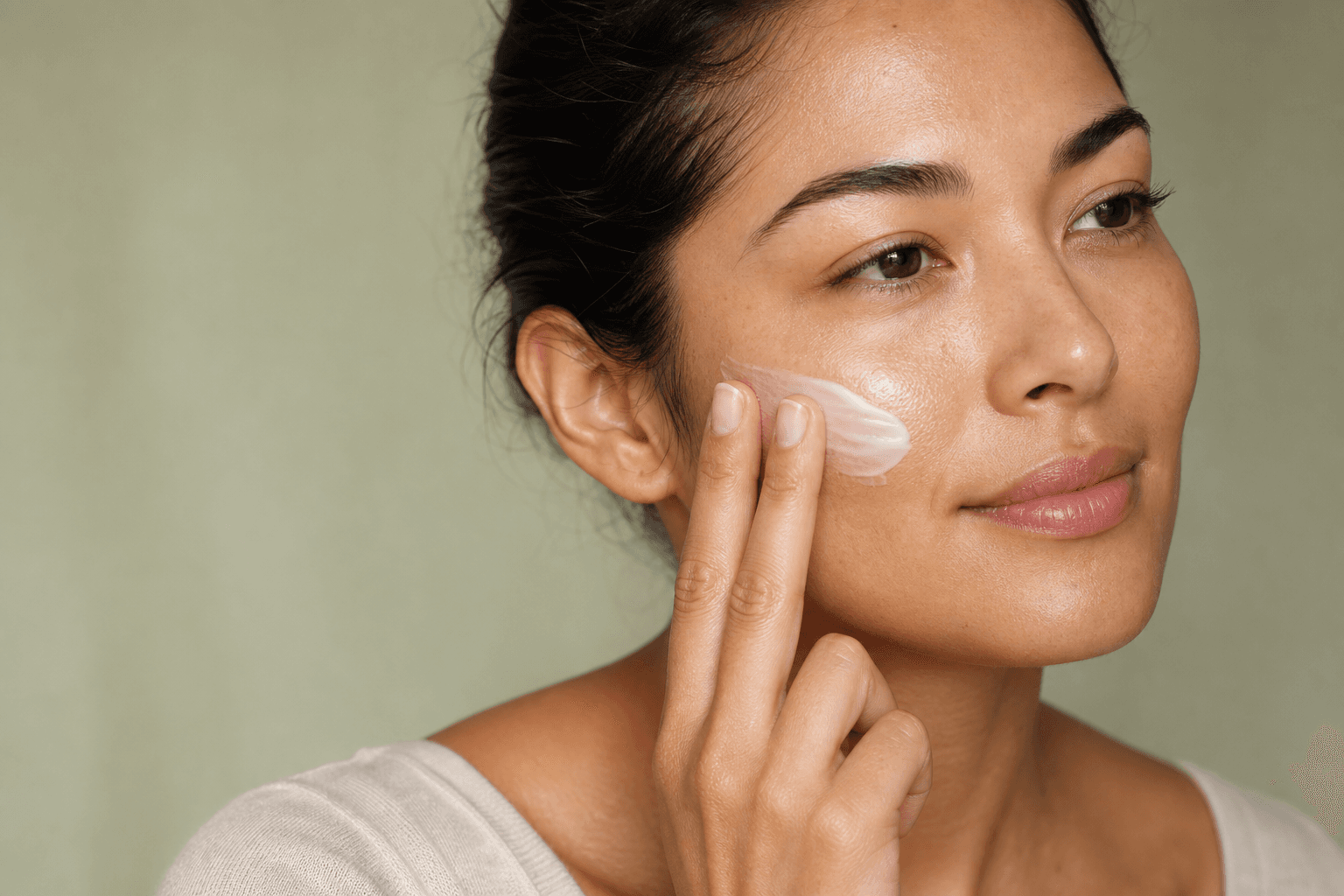
CREAM BARRIER
Support that helps hold water in
A well-formulated moisturizer can reduce surface water loss and help skin feel more comfortable.
START WITH THE FOUNDATION
The skin barrier is more than a surface
The outermost layer, called the stratum corneum, is an organized structure that holds water in, limits the passage of irritants, and supports skin resilience through everyday change.
Limits water loss
A well-functioning surface slows evaporation so skin can feel more supple and comfortable.
Buffers outside stress
It is the first line of defense against cold weather, low humidity, frequent washing, and irritating ingredients.
Supports routine tolerance
When the barrier is balanced, cleansers, moisturizers, and active products are often easier to tolerate.
Balances texture
A well-hydrated upper layer can look smoother, softer, and more luminous.
THE SCIENCE, SIMPLIFIED
Bricks, mortar, and ceramides
Think of the skin barrier as a wall: corneocytes are the bricks, while ceramides, cholesterol, and fatty acids form the mortar between them. When this lipid organization is disrupted, transepidermal water loss (TEWL) may rise and skin can feel drier, tighter, and more reactive.
Corneocytes build structure
Flattened cells in the upper layer form the main body of its physical resilience.
Lipids organize the gaps
Ceramides, cholesterol, and fatty acids support the layered matrix between cells.
Moisturizer reduces loss
A balance of humectants, emollients, and occlusives attracts water, softens the surface, and limits evaporation.
Look for all three parts in a barrier cream
LIPID 01
Ceramides
A class of lipids naturally found in skin and an important part of the intercellular barrier structure.
LIPID 02
Cholesterol
Works alongside ceramides and fatty acids to support flexibility and organization in lipid layers.
LIPID 03
Fatty acids
Contribute to softness and surface comfort as a complementary part of the complete formula.
Do not chase one ‘magic ratio.’ The complete formula, texture, fragrance content, and how consistently you can use it matter more than a ceramide claim on the front label.
BARRIER CHECK
Your skin may be asking for a pause
One sign is not a diagnosis, but several new changes together can be a useful cue to simplify your routine.
When should you see a dermatologist?
Do not rely only on cosmetics for severe itching, cracking, oozing, widespread redness, swelling around the eyes, or irritation that persists.
Tight after cleansing
You feel the need to apply cream immediately after washing.
Familiar products sting
Serums or creams you previously tolerated suddenly feel uncomfortable.
Flaking and rough texture
Dry patches appear around the nose, cheeks, or mouth.
Redness and warmth
It becomes more visible after actives, harsh weather, or over-cleansing.
Oily yet dehydrated
The surface looks shiny while skin still feels tight and uncomfortable.
Patchy makeup
Complexion products gather around dry areas and no longer sit evenly.
A SIMPLE RECOVERY PLAN
A four-step barrier routine
Your skin may need predictability, not more products. Use a few gentle essentials consistently instead of adding something new.
Cleanse gently
Use lukewarm water and a fragrance-free cleanser that does not leave skin tight. Water alone may be enough in the morning.
Add water back
On slightly damp skin, apply a simple hydration layer with glycerin, panthenol, or hyaluronic acid.
Seal with ceramide cream
Apply a thin, even layer to face and neck. Add a second light layer to very dry areas at night.
Protect with SPF by day
Use broad-spectrum SPF 30+ every morning and choose a texture you can apply comfortably and consistently.
Reduce for now
- Physical scrubs and cleansing brushes
- High-strength AHA/BHA peels
- Frequent or strong retinoid use
- Fragranced and essential-oil products
Keep in the routine
- Gentle, fragrance-free cleanser
- Humectants such as glycerin or panthenol
- Ceramide-containing moisturizer
- Broad-spectrum SPF 30+ every morning
Once skin feels comfortable again, reintroduce actives one at a time and at a lower frequency. Stop if stinging or persistent redness returns.
READ THE LABEL WELL
Choose a barrier formula for your skin
‘Barrier repair’ on the label is not enough. Texture, supporting moisturizers, and potential irritants all need to be considered together.
Dry, sensitive skin
Cream or balm texture
Richer formulas with ceramides, cholesterol, and fatty acids plus glycerin, squalane, or shea butter may feel more comfortable.
Oily but dehydrated skin
Light lotion or gel cream
Look for weightless, fragrance-free formulas with ceramides, glycerin, and panthenol.
Skin tired from actives
Short, calm formula
Simplify to a product without exfoliants, retinoids, or fragrance, and reduce the routine to a few essentials.
Helpful supporting ingredients
Glycerin
A classic humectant that helps draw water into the upper layer.
Panthenol
A vitamin B5 derivative that supports hydration and a soothed skin feel.
Squalane
An emollient that can add softness without a very heavy finish.
Petrolatum
Strongly limits water loss on very dry areas and can be applied in a thin, targeted layer.
REALISTIC EXPECTATIONS
The goal is consistent comfort, not overnight repair
First applications
The surface may begin to feel softer and less tight.
1–2 weeks
With a consistent gentle routine, hydration balance and visible flaking may begin to improve.
Ongoing care
For a more resilient feel, use moisturizer and sunscreen consistently—not only when sensitivity appears.
GOOD TO KNOW
Quick answers about ceramides and the skin barrier
Can I use ceramide cream every day?+
Yes. If your skin tolerates the formula, use it morning and/or evening. Oily skin may prefer a lighter texture.
Can ceramides be used with active ingredients?+
Generally, yes. Ceramides are not exfoliants and can be the moisturizing step in routines with retinoids, acids, or vitamin C. Reduce active frequency if irritation develops.
Are ceramides and hyaluronic acid the same?+
No. Hyaluronic acid is a humectant that helps bind water; ceramides are part of the upper layer's lipid organization. They can complement each other in one formula.
Does stinging mean the product is working?+
No. Comfort is the expected result from a ceramide cream. Stop if you develop significant burning, itching, or persistent redness and consult a dermatologist if needed.
Is a ceramide serum enough?+
A serum may not be enough for very dry skin. A cream containing emollients and occlusives may create a more balanced approach to limiting water loss.
How quickly does the barrier recover?+
Timing varies with the cause of irritation, skin condition, and routine. Comfort may improve within days, but persistent or severe symptoms need professional evaluation.
Complete your barrier routine
Selected for gentle cleansing, layered hydration, ceramide support, and daily sun protection.


This guide is for general information and is not medical diagnosis or treatment. Consult a dermatologist for severe or persistent redness, itching, cracking, or irritation.